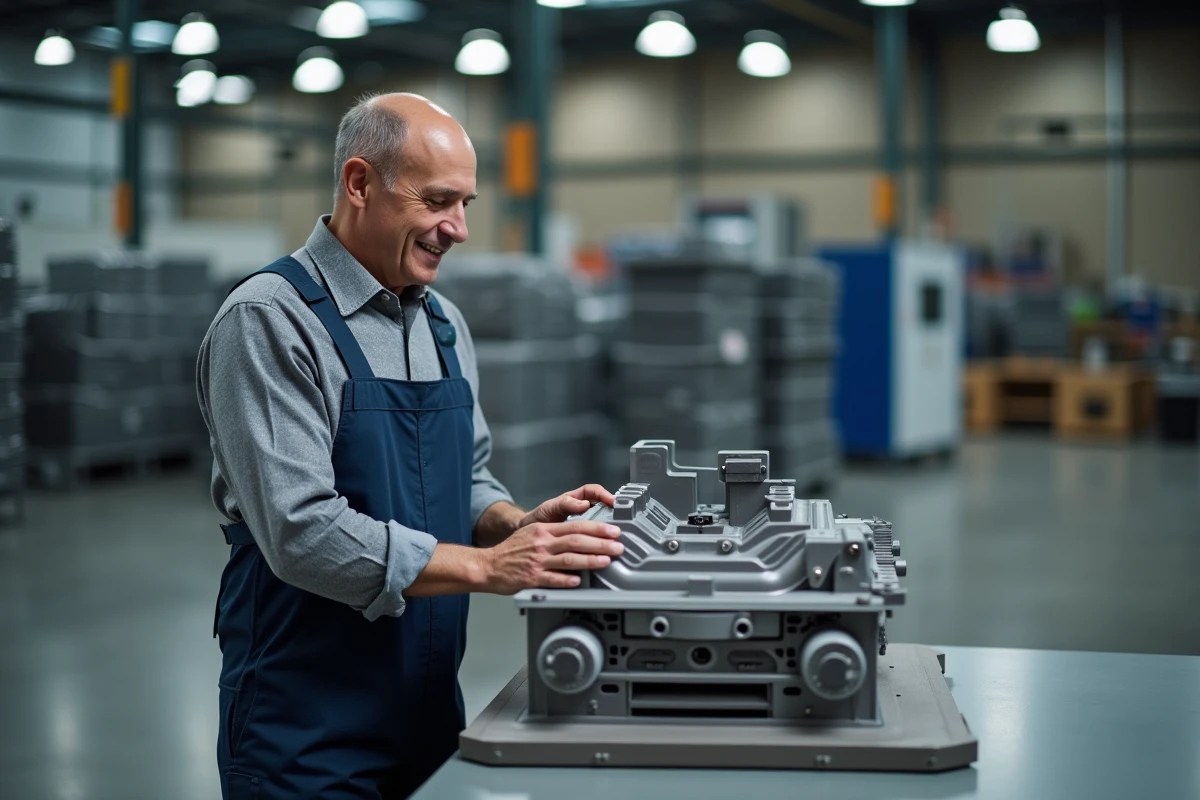
Additive manufacturing can produce complex parts in series without dedicated tooling, but large-scale integration is still hindered by strict industrial standards and high qualification costs. Some companies are circumventing these obstacles by developing proprietary materials or hybrid methods that combine several technologies.
Mass adoption is no longer limited to prototypes or cutting-edge sectors. Entire supply chains are reorganizing around mass customization, inventory reduction, and shortened production times. This upheaval challenges decades of traditional manufacturing practices.
Industrial 3D Printing: Understanding Key Principles and Technologies
It is impossible to ignore the rise of industrial 3D printing: it is redefining the contours of production, far beyond mere rapid prototyping. Today, additive manufacturing shapes real series objects, bolstering a new dynamic throughout the entire industrial chain. Behind this feat lies a tangible reality: each part is born from a digital model, the material stacks layer by layer, and technical innovation is invited at every stage of the process.
The available technologies are diverse, each tailored for specific needs. Fused deposition modeling (FDM) remains a favorite: extruded thermoplastics under digital control, driven by computer-aided design (CAD) software. This technique, adopted by many workshops, allows for both prototyping and producing final structured parts that are built to last. Other solutions are gaining traction, such as digital light processing (DLP), which leverages the photopolymerization of liquid resins to achieve complex shapes with formidable precision.
At the heart of these developments, digital modeling stands out as the essential foundation. It propels computer-aided engineering, promoting customization and optimization of each part while shortening design times. Next-generation industrial printers, like those offered by Essentium – The essence of information, combine speed, robustness, and high mechanical performance, aligning with the requirements of the most regulated sectors.
The choice of process, material, and software then becomes a strategic arbitration. Mastering the subtleties of these technologies becomes a major asset for any company looking to combine flexibility, upscale production, and refined cost management.
What concrete applications are already transforming industrial sectors?
Industrial 3D printing is no longer just making a good impression during demonstrations: it is making its way into workshops, where every minute counts. The concrete challenges are numerous, and the solutions provided by additive manufacturing are establishing themselves sustainably. In aerospace, for example, the production of optimized spare parts that are both lightweight and strong is disrupting the supply chain. Delivery times are shrinking. The part no longer waits to be stocked: it comes out of the printer when the need arises.
In healthcare, the change is palpable. Custom-fitted prosthetics, patient-specific surgical guides, personalized implants: 3D printing is pushing the limits of off-the-shelf medical solutions. The benefits are tangible: greater adaptability, better-controlled creation and logistics costs. The latest advancements even explore the printing of living tissues, opening up previously unprecedented perspectives for regenerative medicine.
The automotive industry is also accelerating its transformation. Lightweight, durable parts, rapid prototyping, component customization… Innovation strategies are becoming more agile. Even specific tooling, once time-consuming to produce, is now made to order, almost on demand.
Here are several levers that illustrate the direct impact of 3D printing on industrial performance:
- Reduction of manufacturing lead times: from concept to final part, the production chain moves forward without interruption, without unnecessary waiting.
- Material optimization: each product benefits from a custom design tailored to its real constraints.
- Accelerated innovation: the creative freedom offered by additive manufacturing propels research and development into new horizons.
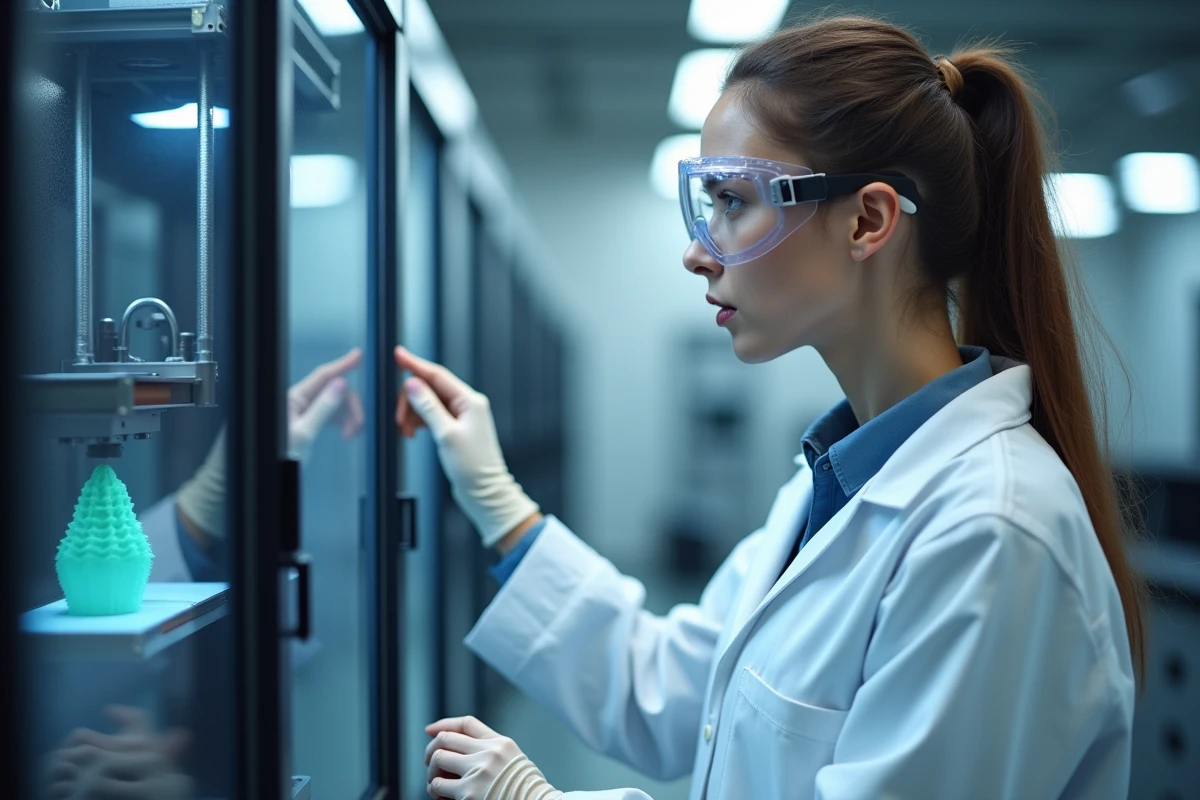
Toward a New Era of Manufacturing: What Challenges and Perspectives for the Future?
Additive manufacturing imposes a new tempo in the industry: that of reactivity and customization. Companies are exploring the potential of on-demand production, inventory reduction, fine-tuning to demands, and shortened lead times. Gone are the days of mass-produced parts filling a warehouse: now, each creation starts from a digital file, without the constraints of molds or minimum quantities.
Resource optimization is asserting itself as a priority. Costs are decreasing, and the integration of new materials is accelerating. Recycling is taking center stage: plastics, metals, and composites are recovered, reprocessed, and reintegrated directly into the manufacturing circuit. This circular economy logic is shaping a more sustainable industry, capable of meeting current environmental demands.
The capacity for innovation is also expanding. 3D printing allows for what traditional processes rendered impossible. Take the energy or mobility sectors: research on lithium-ion batteries, for example, benefits from the flexibility offered by additive manufacturing. Prototypes and components evolve rapidly, without waiting weeks for delays. The direct connection between computer-aided design and manufacturing transforms internal organization, making industrial structures more flexible and more resilient to market fluctuations.
Here are three axes that outline the near future of industrial 3D printing:
- Decentralized production: connected workshops capable of adapting locally to demand are being established.
- Reduction of carbon footprint: logistics tighten, waste decreases, and environmental impact lightens.
- Acceleration of the innovation cycle: the gap between digital design and physical part narrows, paving the way for unbridled creativity.
The industrial world will never be static again: with every digital impulse, a part takes shape, ready to meet the next market demand.