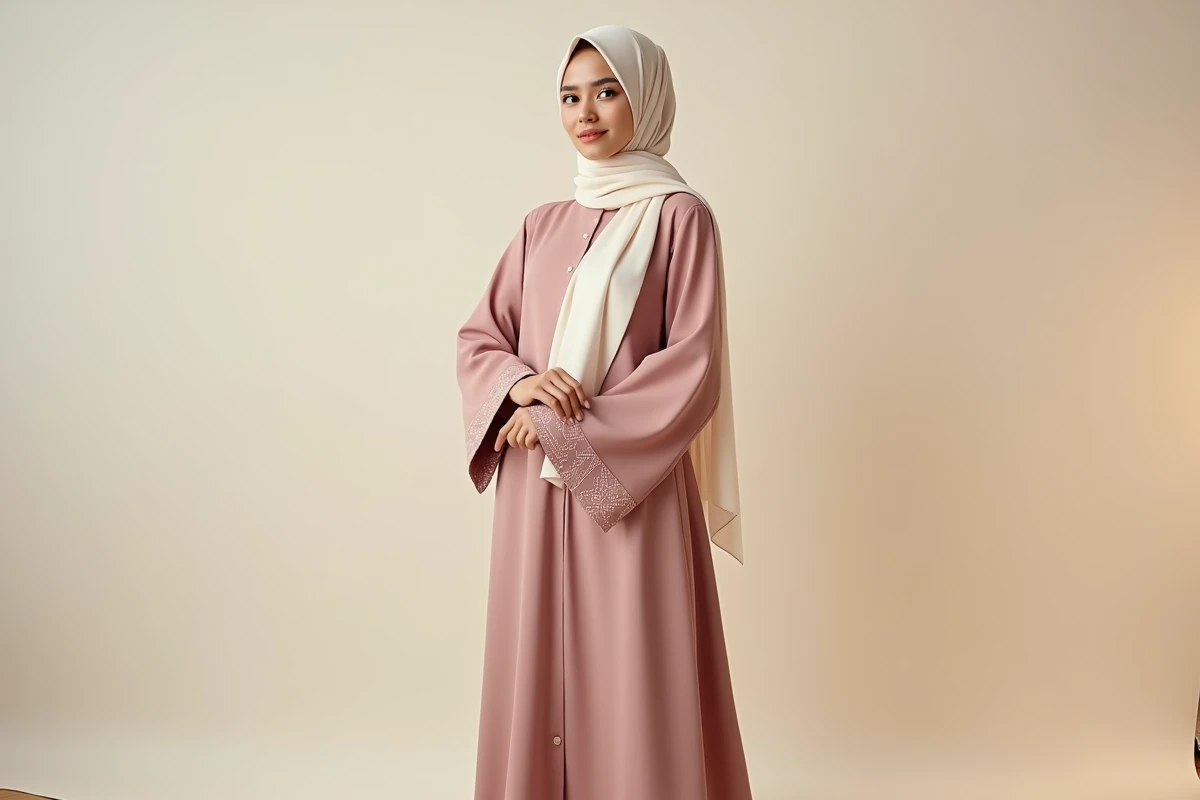
When a model refuses a pose, a shooting location, or an advertising campaign for religious reasons, she is not throwing a contractual tantrum. She is applying a structured ethical framework that redefines the conditions of practice for a profession long perceived as incompatible with Muslim practice. The issue goes beyond simply wearing a veil on a runway: it touches on contracts, internal charters, and concrete trade-offs between spirituality and commercial demands.
Modesty Charters and Contract Clauses: What Changes in Castings
In recent years, English-speaking and French-speaking Muslim models have formalized what are called “modesty contracts” or personal modesty charters. These documents, sometimes integrated directly into the contracts signed with brands, set precise limits.
A thorough analysis of the profession of modest modeling in Islam reveals that these restrictions are not merely a marketing positioning, but a spiritual commitment translated into enforceable contractual obligations.
- Refusal of poses deemed sexualized, even if the outfit worn covers the entire body
- Exclusion of shooting locations such as mixed beaches or clubs, considered incompatible with Islamic modesty
- Prohibition of physical contact with male models during shoots
- Systematic rejection of campaigns associated with alcohol or online gambling
These criteria function as a filtering mechanism for collaborations. The modesty charter precedes commercial negotiation, not the other way around. A modest model who signs without a charter exposes herself to situations where spiritual compromise becomes the adjusting variable.
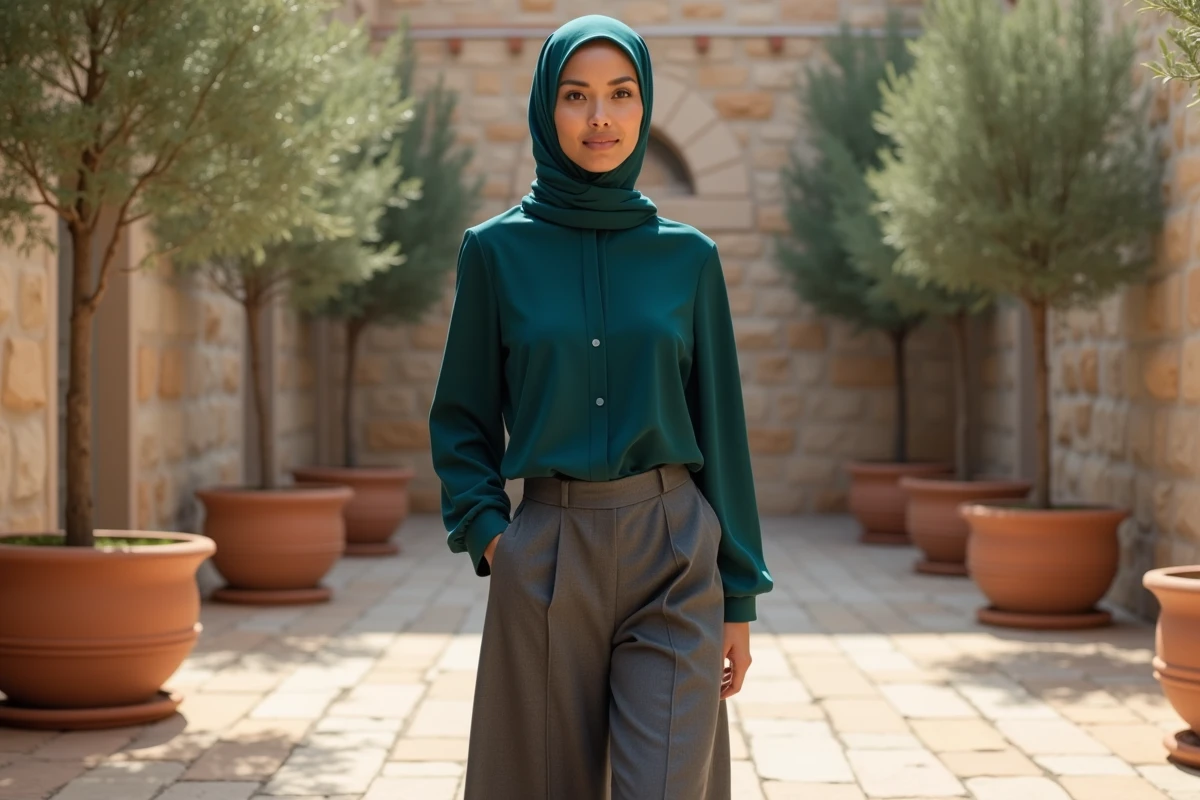
Modest Model vs. Conventional Model: Structural Differences
Comparing the two profiles on concrete criteria allows us to measure the real gap between these two practices of the profession.
| Criterion | Conventional Model | Modest Model |
|---|---|---|
| Campaign Selection | All categories (luxury, lingerie, alcohol, cosmetics) | Filtered by ethical charter (exclusion of alcohol, gambling, lingerie) |
| Physical Contact in Shooting | Generally accepted | Rejected with male models |
| Shooting Locations | No restrictions | Exclusion of locations deemed incompatible (mixed beaches, clubs) |
| Poses | According to artistic direction | Framework defined by the personal charter |
| Agencies | Generalist agencies (Elite, IMG) | Specialized agencies (Modest Fashion Week) or dedicated divisions of generalist agencies |
The table shows that modest modeling is not a lighter version of conventional modeling. The constraints do not reduce the available workload in the same way across markets. In Dubai, Jakarta, or London, Modest Fashion Weeks have structured a sub-market with its own castings, image standards, and payment grids.
A Sub-Market That Is Professionalizing
Agencies like IMG Models are now signing veiled models. Specialized platforms (Haute Elan, Verona Collection) are organizing a parallel circuit. These are no longer isolated initiatives but a distinct segment of the profession, with its own visual codes and technical requirements.
However, this circuit remains narrower than general modeling. The number of potential partner brands mechanically decreases when the charter excludes several product categories. The modest model often compensates with a strong presence on social media, where her loyal audience represents direct commercial value for modest fashion brands.
Islamic Ethics and Brand Image: The Ongoing Tension
Islamic modesty (haya) is not limited to clothing. It encompasses behavior, gaze, and the intention behind the act. For a Muslim model, posing in front of a camera raises a precise theological question: does the image produced respect the intention of modesty in its entirety?
Some voices in the religious field consider that any form of showcasing the body, even when covered, remains problematic if it aims to elicit aesthetic admiration. Others believe that modest fashion constitutes a form of da’wa (invitation to faith) by example, making a religious practice visible in the public space.
The Criterion of Intention (niyya)
In classical Islamic ethics, the intention that precedes the act determines its moral value. A model who works to promote clothing modesty and a model who works for personal fame perform the same gesture, but not the same moral act according to this framework.
This distinction explains why two modest models can wear the same outfit and occupy opposing ethical positions in the eyes of religious authorities. Clothing alone is not sufficient. The question concerns what the staging produces as an effect on the viewer and on the model herself.
Social Media and Modest Modeling: Where the Boundary Lies
Instagram and TikTok have transformed modest modeling into a hybrid activity, between fashion profession and digital influence. Several model-influencers publish their modesty charters directly on their profiles, making their ethical criteria visible even before the first contact with a brand.
This transparency creates a regulatory mechanism through the audience. The community publicly corrects any perceived deviation from the announced charter. A collaboration deemed incompatible with the displayed values generates immediate reactions, sometimes harsher than any institutional reminder.
The social network thus becomes a space for ongoing negotiation between commercial demands and the spiritual expectations of the audience. The modest model plays a role here that traditional modeling does not know: that of a visible guarantor of ethical coherence, subject to collective judgment in real time.
Modest modeling in Islam is not just a matter of clothing resolved by wearing the hijab. Contractual charters, campaign filtering, the criterion of intention, and community pressure on social networks outline a distinct professional framework. This framework continues to structure as Modest Fashion Weeks and specialized agencies gain visibility in the markets of London, Dubai, and Jakarta.