Your car starts every morning, runs without any suspicious noise, and brakes normally. However, a battery can fail in a parking lot without warning, an under-inflated tire can cause uneven wear, and a suspension defect can go unnoticed until the technical inspection. Maintaining your vehicle on a daily basis means acting before these late signals, with simple actions that require neither specialized tools nor advanced mechanical knowledge.
12-Volt Battery: The Most Common Breakdown Can Be Easily Prevented
Have you ever noticed that a car parked for a week sometimes has trouble restarting? It’s no coincidence. The 12-volt battery is the leading cause of breakdowns, even in recent models. According to the ADAC breakdown statistics for interventions carried out in 2025, the battery accounts for 45.4% of breakdowns, far ahead of engine or electronic issues.
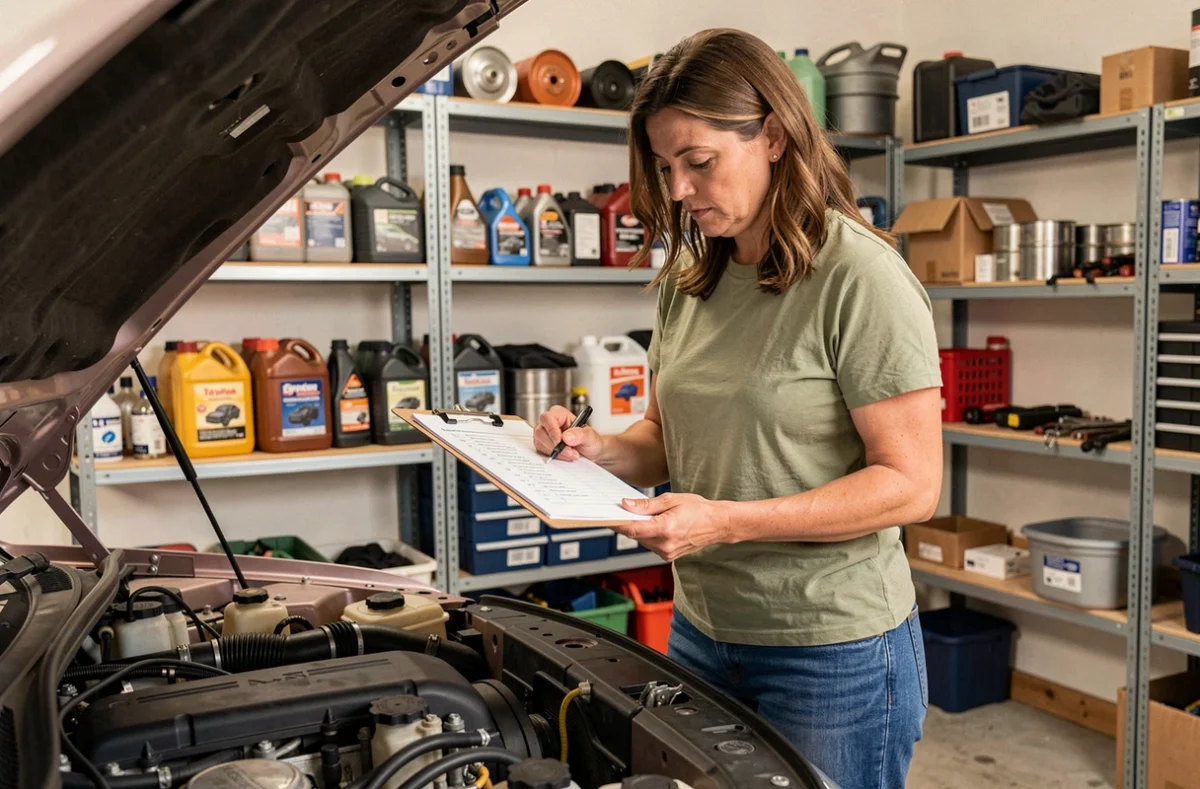
This figure means that one in two motorists experiencing a breakdown is due to a component that can be checked by oneself. A basic multimeter, sold for a few euros, is enough to measure the voltage at the terminals. Below 12.4 volts with the engine off, the battery starts to weaken. Winter and long periods of inactivity accelerate this decline. Many drivers will find additional resources on www.nouvelle-dimension.fr to delve deeper into these common checks.
Checking the battery before winter and after prolonged inactivity should be part of seasonal reflexes, just like checking the antifreeze in the coolant.
Tires and Suspensions: What the Technical Inspection Penalizes the Most
Classic maintenance lists mention tire pressure. But they often stop there, without explaining why this point matters so much. Defects related to axles, wheels, tires, and suspensions represent a significant portion of reasons for failing the technical inspection, especially on older vehicles as the French fleet ages.
Pressure and Wear: Two Distinct Checks
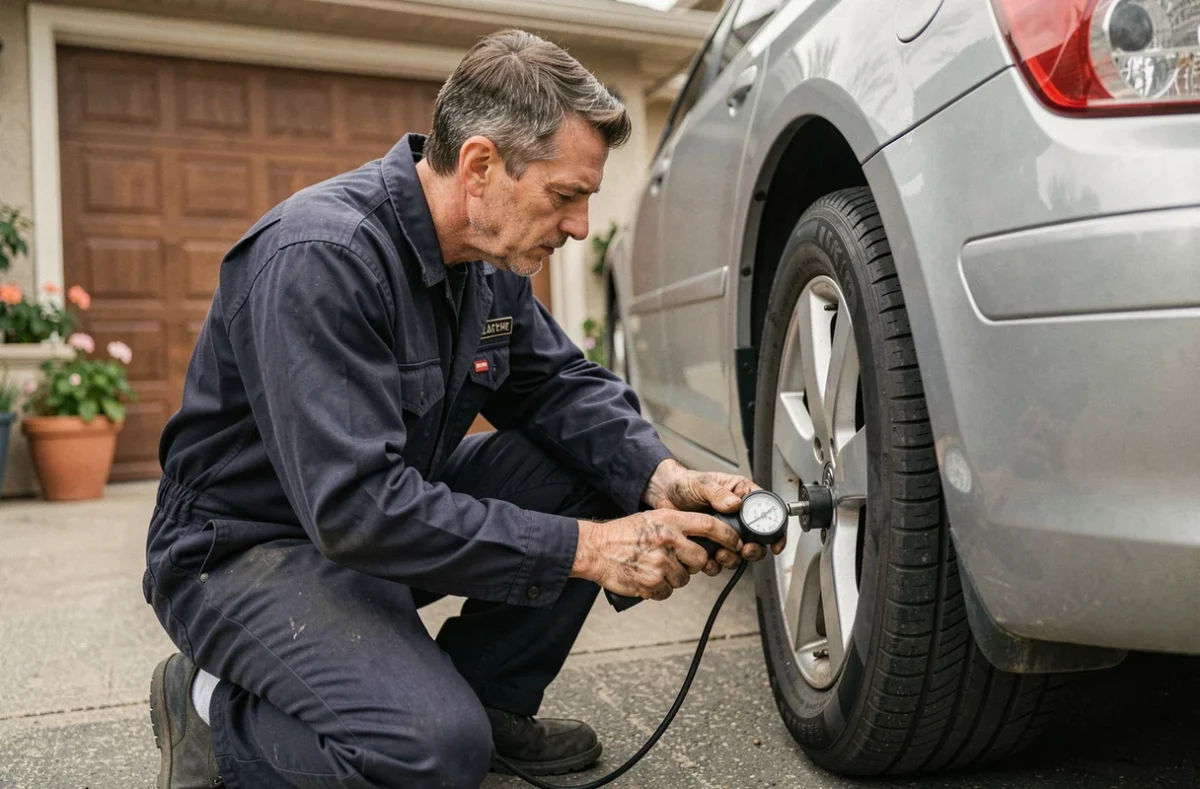
Pressure should be checked when cold, at least once a month. An under-inflated tire by a few tenths of a bar is not visible to the naked eye, but it heats up more, wears on the sides, and increases braking distances.
Wear, on the other hand, can be read on the indicators molded into the tread. When the rubber reaches the level of these small bridges (located at 1.6 mm deep), the tire is legally out of use. Before reaching that point, uneven wear (more pronounced on the inside or outside) signals a geometry or suspension problem.
Shock Absorbers and Ball Joints: The Forgotten Daily Checks
Suspensions degrade gradually. We get used to a car that bounces a little more, that pulls slightly in turns. These discreet signals indicate tired shock absorbers or worn steering ball joints. A simple test: press firmly on one corner of the hood and then release. If the body bounces more than once, the shock absorber is no longer doing its job.
- Tire pressure should be checked when cold, at least once a month, relying on the values indicated on the door label or in the maintenance booklet.
- Tread wear should be visually inspected by looking for wear indicators and spotting any asymmetry.
- Suspensions should be tested by the bounce test on each corner of the vehicle, and by paying attention to knocking noises on rough roads.
Electric Vehicle Maintenance: What Really Changes
The absence of engine oil changes and spark plugs gives the impression that an electric vehicle requires no maintenance. This is a misconception that can be costly.
The higher weight of batteries and the instantaneous torque of the electric motor put more strain on the tires. Wear can be faster than on an equivalent thermal model, making regular checks even more relevant.
The high-voltage battery cooling circuit replaces the classic engine cooling loop. It uses a heat transfer fluid that must be checked according to the manufacturer’s recommendations. A defect in this circuit can lead to accelerated degradation of the battery cells, directly impacting range.
Regenerative braking, which recovers energy during deceleration, reduces wear on the pads. In return, the brake discs can corrode due to lack of use. Regular firm braking, for example once a week on an appropriate route, prevents corrosion from seizing the discs.
Washing and Protecting the Bodywork: Beyond Aesthetics
Regular cleaning of a vehicle is not just about appearance. Salt residues in winter, bird droppings, and tree sap attack the varnish and then the paint. Once corrosion sets in, repairs cost much more than preventive washing.
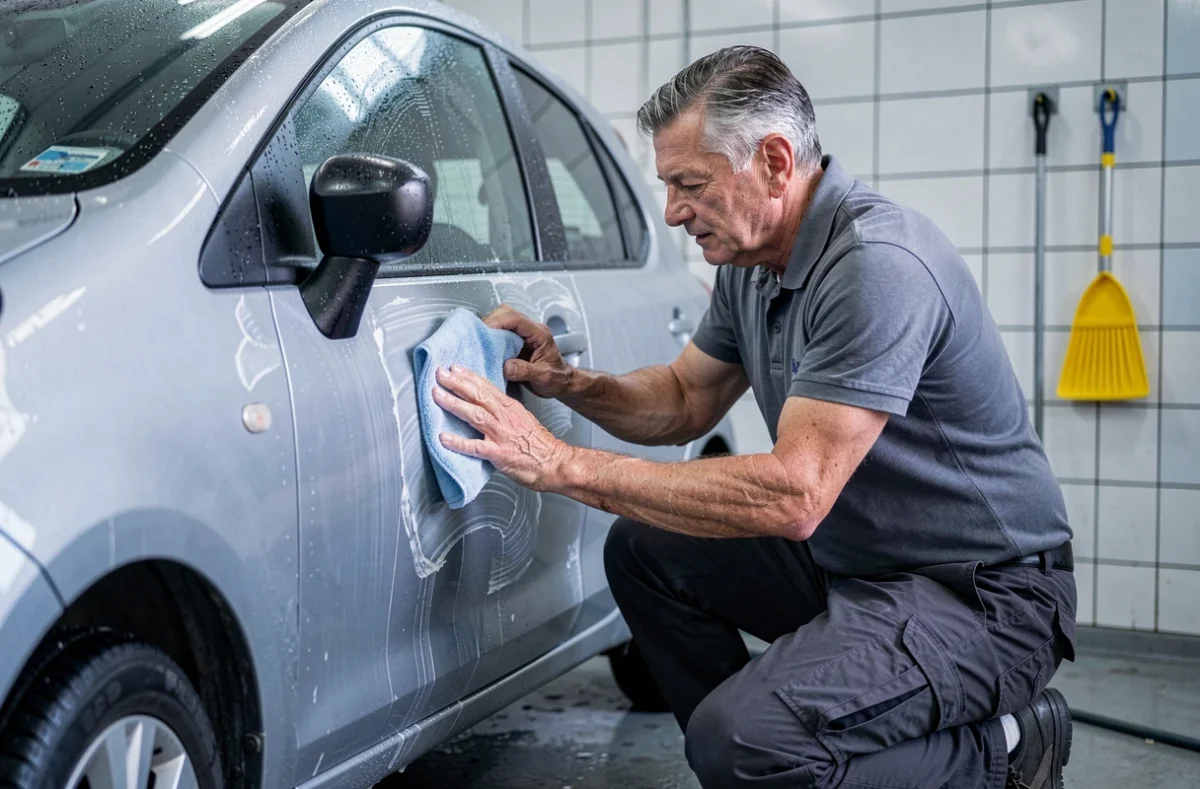
Why prioritize hand washing over an automatic roller wash? Rotating brushes, even if made of textile, can create micro-scratches on the bodywork over time. A microfiber mitt and a suitable car wash product better preserve the varnish.
- Wash the bodywork at least twice a month, more often during road salting periods or after driving on dirt roads.
- Apply wax or a hydrophobic treatment every three to four months to protect the varnish from chemical aggressions.
- Clean the wheel arches and the undercarriage after winter, areas where salt accumulates and accelerates corrosion.
- Use a dedicated microfiber cloth for the windows, separate from the one used on the bodywork, to avoid product streaks.
Regular washing protects resale value as much as the paint. In the used car market, the condition of the bodywork remains one of the primary visual evaluation criteria.
Every maintenance action, from checking the battery to methodical washing, is part of a preventive logic. Replacing worn pads costs a fraction of the price of a damaged disc. Inflating a tire takes two minutes, while replacing a destroyed tire due to under-inflation requires an appointment and a budget.