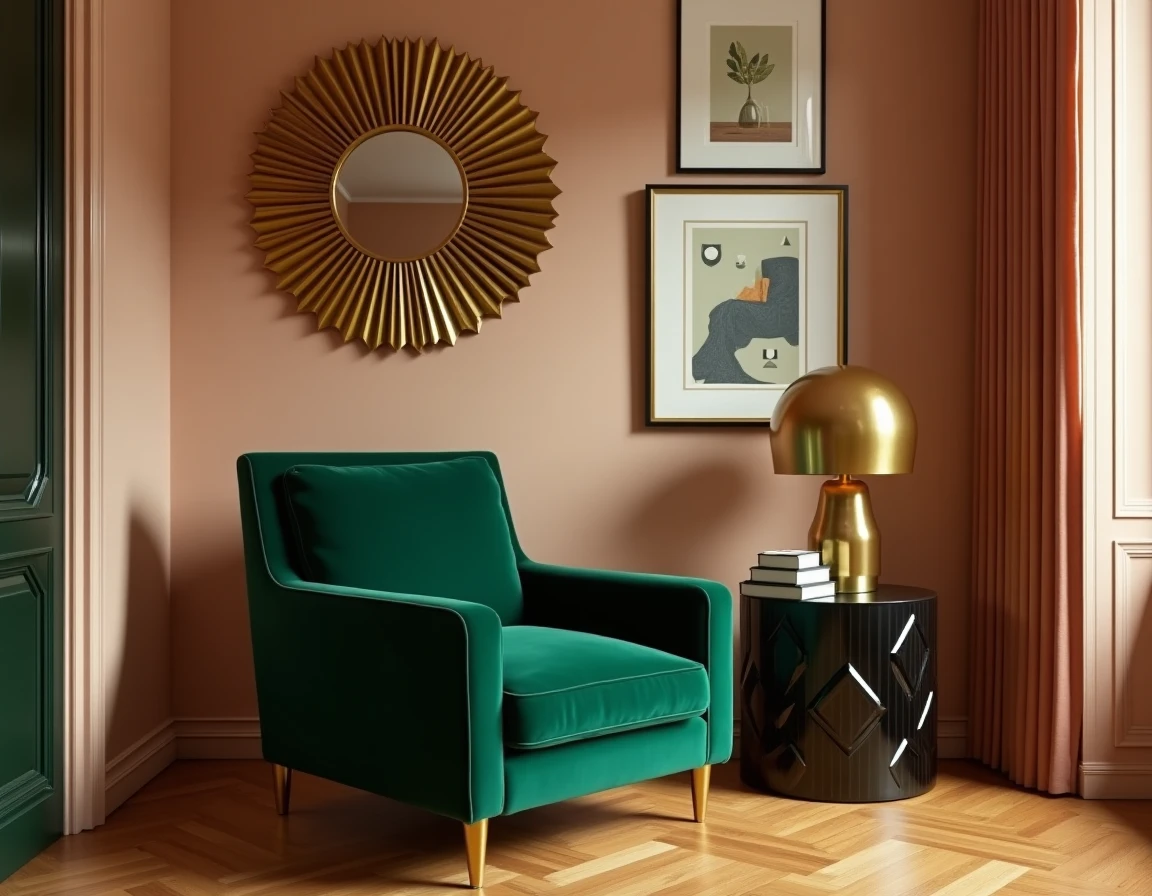
Velvet, brass, geometric patterns: Art Deco home style is making a comeback in French interiors, but in a form different from that of the 1920s. The decor trends of 2026 favor natural materials, tactile textures, and less shiny finishes. Comparing traditional materials of the style with their contemporary alternatives allows us to assess what has changed and what deserves to be preserved.
Traditional Art Deco Materials vs. Contemporary Alternatives
The Art Deco style relies on a precise material vocabulary. The question is which materials remain relevant in a current interior and which ones would benefit from being replaced by more suitable equivalents for today’s constraints.
| Traditional Material | 2026 Alternative | Main Use | Point of Caution |
|---|---|---|---|
| Polished brass | Brushed or satin brass | Lighting, handles, furniture legs | Polished brass shows fingerprints more |
| Veined white marble | Marble effect ceramic or terrazzo | Countertops, table tops, bathrooms | Natural marble requires regular maintenance |
| Treated stain-resistant synthetic velvet | Thick cotton or linen velvet | Sofas, armchairs, headboards | Law No. 2025-188 regulates PFAS in treated textiles |
| Glossy black lacquer | Oiled walnut or matte stained wood | Buffets, consoles, mirror frames | Matte finishes better conceal micro-scratches |
| Smoked glass | Textured fluted glass | Glass doors, partitions, lighting | Fluted glass filters light without darkening the room |
This table highlights a shift: Art Deco materials are moving towards matte and natural textures. Gloss is giving way to surfaces that age better and require less maintenance. The catalogs available on maisonartdeco.fr illustrate this transition between classic pieces and updated variations.
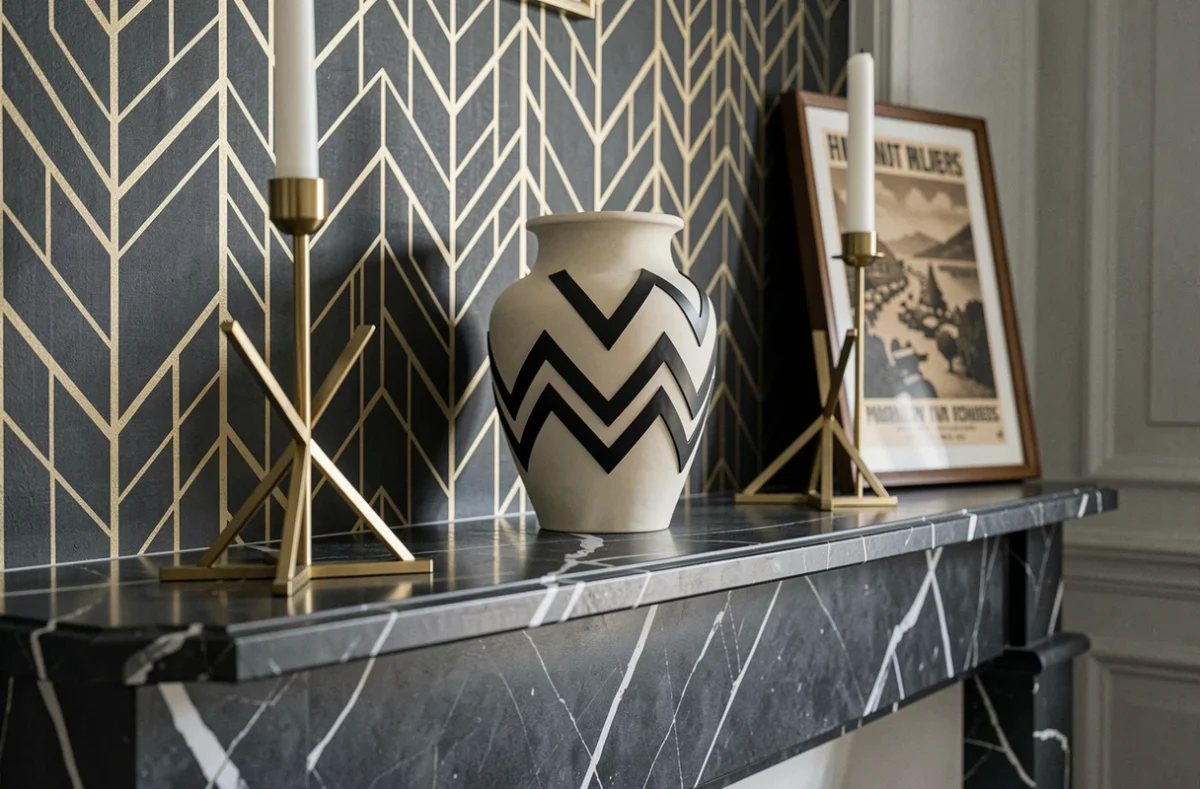
PFAS Regulation and Art Deco Textiles: What the Law Changes for Furniture
Velvet is a staple of the Art Deco style in both the living room and the bedroom. Sofas, cushions, and curtains made of treated stain-resistant or water-repellent velvet have long been favored for their ease of maintenance.
Law No. 2025-188 of February 27, 2025, changes this situation. It regulates the use of per- and polyfluoroalkyl substances (PFAS) in consumer products, including upholstery textiles. Treated water-repellent fabrics must document the absence of PFAS to remain compliant.
For an Art Deco interior, this steers choices towards naturally resistant materials:
- Thick cotton velvet, heavier and denser, resists common stains without added chemical treatment
- Thick linen, whose fiber strengthens with washing, is suitable for cushion covers and curtains
- Curly wool, used in armchair upholstery, offers a texture consistent with the geometric aesthetic of the style
This regulatory shift encourages the selection of textiles with transparent compositions. A velvet labeled Oeko-Tex or documented as PFAS-free remains compatible with the elegance of the style, without health compromises.
Indoor Air Quality and Art Deco Furniture Choices
Laquered furniture, veneer adhesives, and certain decorative finishes emit volatile organic compounds (VOCs). In an Art Deco interior where furniture is often dense (buffet, console, framed mirror, multiple light fixtures), the concentration of emission sources in one room can degrade air quality.
Shifting from glossy lacquer to oiled or waxed wood reduces this exposure. An oiled walnut piece emits significantly fewer VOCs than an MDF piece covered in polyurethane lacquer. Controlled mechanical ventilation (CMV) remains a necessary complement, especially in closed rooms like a bedroom or office.
Specifically, for an Art Deco living room, this means prioritizing:
- Solid wood furniture (walnut, ash, dark-stained oak) rather than lacquered panels
- Hard oil or wax finishes rather than polyurethane varnishes
- Sufficient air renewal if the room accumulates several new decorative elements
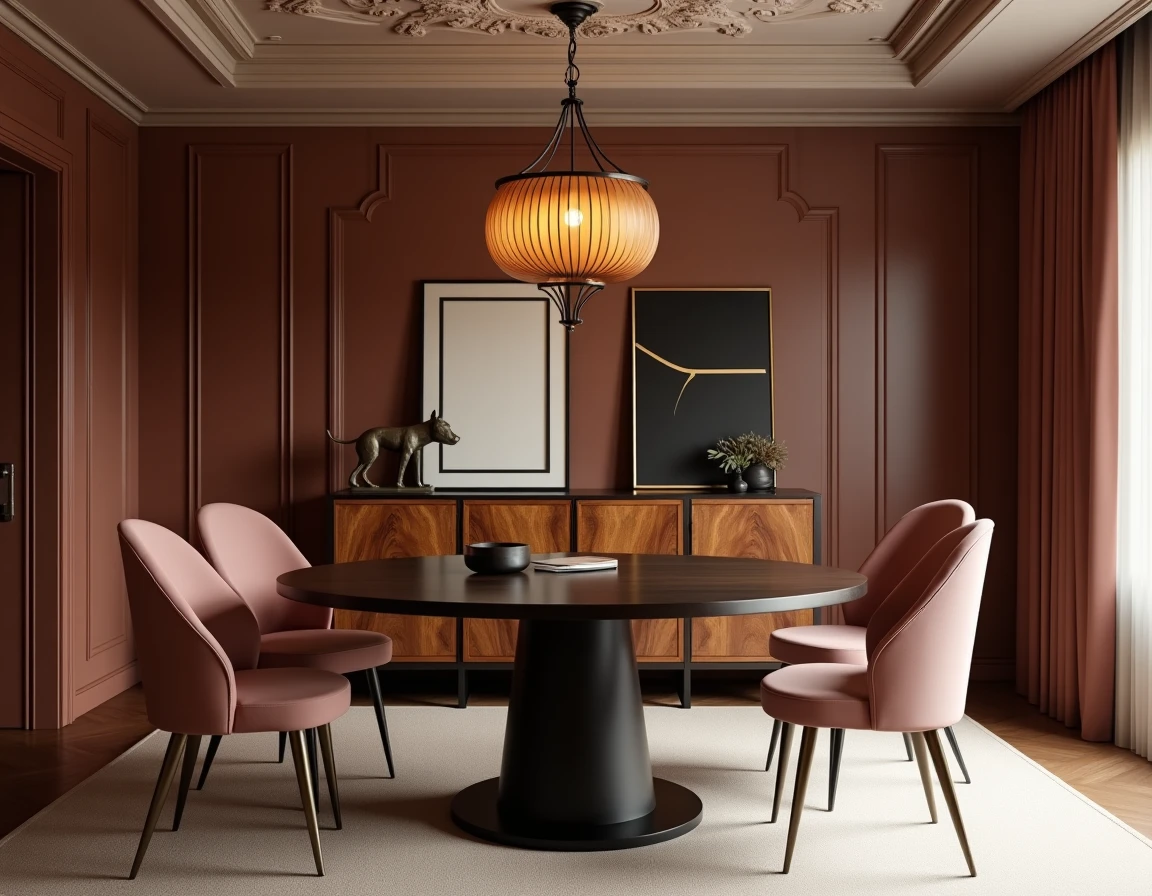
Adapting Art Deco Geometric Patterns Without Overcrowding the Space
A geometric pattern works better as a focal point than when repeated on all surfaces. The most accomplished Art Deco interiors concentrate fan, chevron, or arch shapes on one or two elements per room.
In a living room, a Gatsby-patterned wallpaper on a single wall is enough to establish the style. The rest of the walls remain solid, in a deep tone (fir green, duck blue, burgundy) that dialogues with the pattern without competing with it.
Distributing Geometric Accents Room by Room
In the bathroom, chevron or scale tiles work as a backsplash or in a shower niche. Covering all the walls creates a visual saturation effect that overwhelms the room. In the bedroom, a tufted velvet headboard with a diamond pattern carries the style on its own.
Satin brass appears in discreet touches: door handles, wall sconces, coffee table legs. In contrast, multiplying golden metallic surfaces on the light fixture, mirror, and table creates an overly loaded effect, far from the measured elegance sought by the current style.
Deep Colors and Art Deco in the Living Room
The most coherent palettes combine a saturated color (midnight blue, emerald green, dark terracotta) with a warm neutral (rosy beige, cream, taupe gray). The contrast between a deep hue and metallic accents creates the visual tension characteristic of the style. The fall-winter 2026 trends confirm this return to dense colors, after several seasons dominated by light tones and off-whites.
The choice of documented materials, the limitation of chemical treatments on textiles, and a measured application of geometric patterns constitute the three axes that distinguish a sustainable Art Deco interior from a mere accumulation of gilded objects. The most structuring factor remains the regulation on PFAS, which concretely reshapes the choice of upholstery fabrics for the coming years.