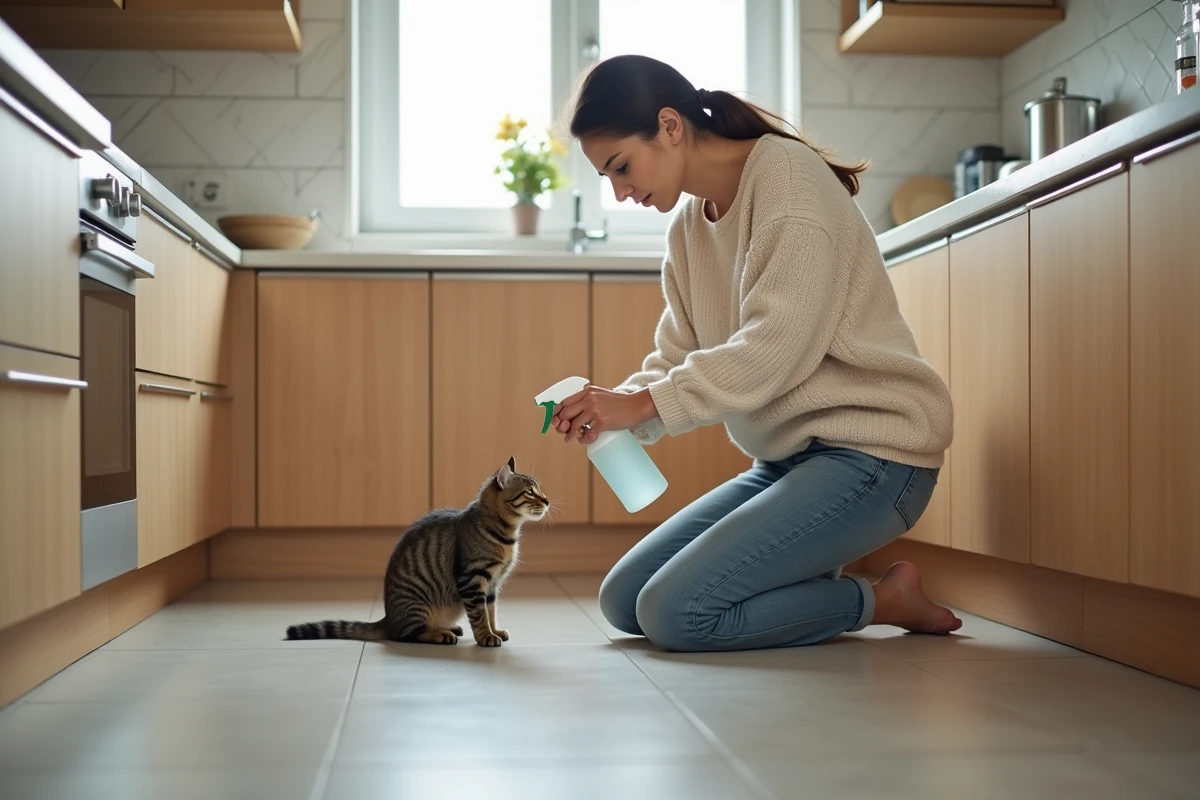
Regular exposure to certain household disinfectants is among the main causes of accidental poisoning in pets. Despite their popularity, products like Sanytol contain active substances whose toxicity for cats remains largely underestimated.
Sanytol and Cats: Why Caution is Necessary with Household Products
Over the weeks, the habit of using a multi-purpose disinfectant like Sanytol to sanitize one’s home becomes ingrained. However, the danger of Sanytol for cats is a topic that captures the attention of pet owners. The formula of these products, designed to eliminate bacteria and viruses, contains chemical agents that are particularly harmful to cats. Their bodies, so different from ours, poorly tolerate certain common molecules. Even in minimal doses, a toxic household product is enough to cause an accident.
With their sense of smell, curiosity, and territorial instinct, cats investigate every corner, rub against furniture, and roll on the floor. A freshly cleaned floor or surface then becomes a source of direct exposure. Grooming follows, with their tongues on their fur, and thus the vicious cycle begins. Among the trio of substances that worry veterinarians are phenoxyethanol, quaternary ammonium, and essential oils, found in many cleaning products. Manufacturers recommend adhering to dosage instructions, but the reality of daily life requires heightened vigilance.
Simple actions can help protect your pet: ventilate thoroughly after each use, restrict access to treated rooms as long as surfaces remain damp, and ban any conventional disinfectant for dishwashing or the cat’s litter. Here, it is not just a precaution, but a way to avoid sometimes irreversible harm. Choosing household products for cats requires a reassessment of our habits. To go further, the file on the dangers of Sanytol for cats offers a detailed overview and practical advice from specialists.
What are the Concrete Risks to Your Cat’s Health and How to Recognize Them?
Contact with toxic household products like Sanytol can trigger insidious or sudden reactions in cats. The chemical substances designed to neutralize microbes prove to be harmful to cats even at very low doses. Their metabolism, lacking certain detoxification mechanisms, cannot eliminate these toxins as a human’s would.
The signs of poisoning vary depending on the substance and the amount absorbed. Some symptoms appear quickly: excessive salivation, vomiting, tremors, balance disorders. Others, more insidious, manifest after several exposures or prolonged contact: unusual fatigue, loss of appetite, lesions in the mouth, respiratory distress. It is therefore essential to remain attentive, even to the most discreet signals.
Here are the most frequently observed symptoms of poisoning in cats:
- Excessive salivation or drooling
- Rapid breathing or unusual panting
- Gingivitis, presence of ulcers in the mouth
- Muscle weakness, marked lethargy
- Seizures in the most severe cases
In case of alert, the speed of action makes all the difference. At the slightest doubt about exposure to a harmful product for cats, contact a veterinarian without delay. Keep the bottle or reference of the product involved, as this will facilitate the care of your pet. Because they explore, groom themselves, and live close to the ground, cats are particularly vulnerable to household toxins.
Practical Solutions for Safe Cleaning: Precautions, Safe Actions, and Non-Toxic Alternatives
Preserving the health of cats requires adjustments in cleaning routines. Toxic household products for pets, often omnipresent, demand attention and discernment. Limit the application of multi-purpose disinfectants or disinfecting detergents in areas where your cat roams. After each use of cleaning products, remember to ventilate the room, even if the product seems harmless at first glance.
To avoid any risk, there are non-toxic alternatives: diluted white vinegar, pure Marseille soap, or baking soda ensure cleanliness and hygiene without posing a threat to your cat’s health. These simple and accessible solutions allow you to clean the house, textiles, or the bathroom while eliminating the risk of poisoning.
To easily integrate these solutions into your daily routine, here are some reliable practices:
- Wash floors with hot water and a bit of white vinegar; be sure to rinse all surfaces well after application.
- Use a baking soda paste to deodorize fabrics or your pet’s cushions.
- Ensure your cat does not touch still damp surfaces: it’s better to wait a few extra minutes than to take an unnecessary risk.
Keep in mind: a cat naturally licks its paws after each exploration. Cleaning and then thoroughly rinsing frequented areas remains the best defense. The safety of your companion is built through these repeated, discreet, yet decisive actions. Preserving a cat’s health means rejecting approximation and making care the guiding principle of daily life.