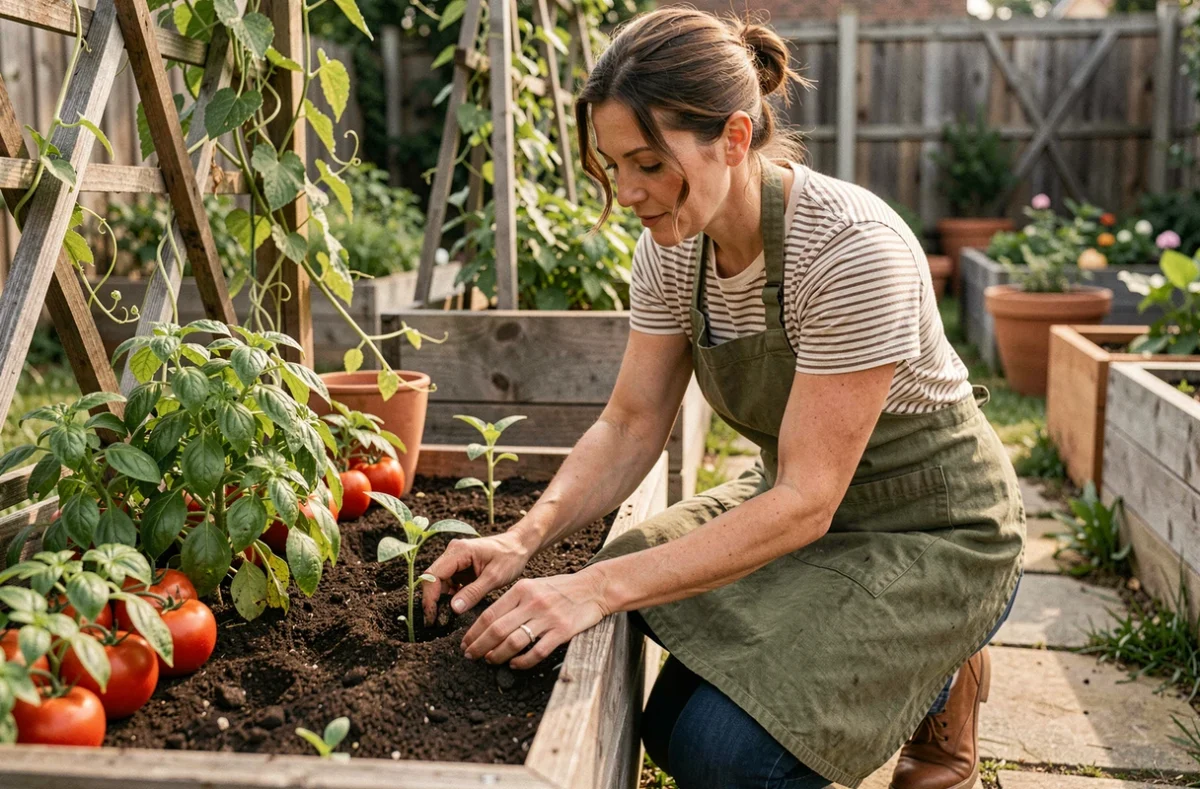
A productive organic vegetable garden does not rely on a list of mechanical actions. It is based on understanding what happens beneath the surface of the soil and among the plants. Before sowing anything, the most cost-effective question to ask concerns the soil itself, its structure, its microbial life, and its ability to nourish roots without massive external inputs.
Biocontrol and organic products in the vegetable garden: a confusion to clarify
Have you ever purchased a product labeled “suitable for organic farming” thinking it was automatically safe? This confusion is common, and it deserves an explanation.
A summary published by Inf’OGM on September 1, 2026, reminds us that the categories “biocontrol” and “organic farming” do not completely overlap. A product can fall under biocontrol without being allowed in organic farming, and vice versa. Each product is still subject to specific approval, even in the garden.
In practical terms, this means that a pyrethrum-based insecticide sold in garden centers with a green logo is not a harmless product. It also eliminates beneficial insects (ladybugs, hoverflies) if applied indiscriminately. In an organic vegetable garden, the logic is the opposite: we first create an environment where pests are naturally regulated, and we only intervene as a last resort. To delve deeper into this preventive approach applied to vegetables, the vegetable garden of Jardinage Bio details cultural methods suited to each season.
The Ecophyto 2030 strategy, published by the Ministry of Agriculture on May 6, 2024, also confirms the goal of halving the use of phytopharmaceutical products by 2030. Even for an amateur gardener, prevention takes precedence over treatment.
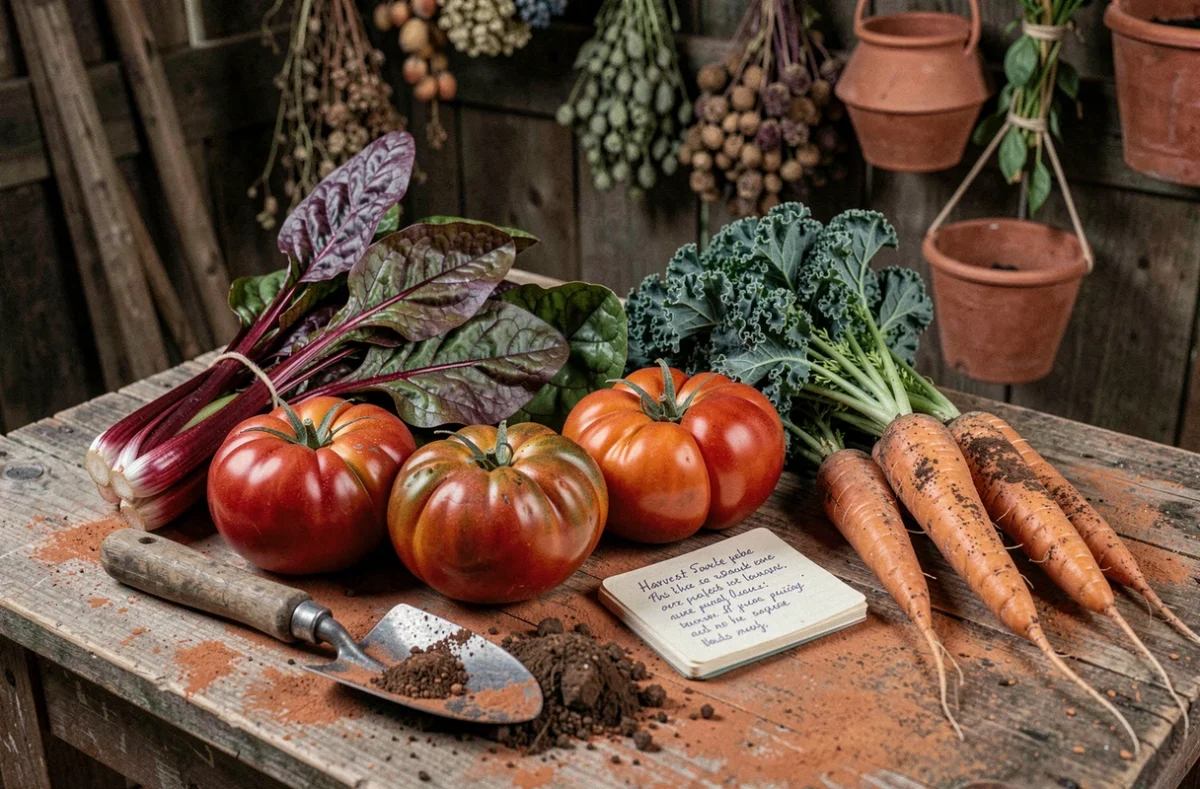
Organic soil fertility: building a living soil without chemical fertilizers
A productive soil is recognized by its structure. Take a handful of moist soil and squeeze it. If it forms a compact ball that does not break apart, your soil is too clayey and lacks organic matter. If it crumbles between your fingers like sand, it does not retain water or nutrients.
In both cases, the answer is the same: mature compost. Compost acts as a universal amendment. It aerates heavy soils and provides cohesion to light soils. But beware of the classic trap: poorly decomposed compost can lock up nitrogen instead of releasing it. If your pile smells of ammonia or still contains identifiable vegetable pieces, it is not ready.
Signs of biologically active soil
A living soil is literally teeming with life. When you turn over a handful of soil (as infrequently as possible), you should observe:
- A quantity of earthworms, a sign of good natural aeration and a sufficient organic matter content to feed them
- White mycelium filaments, indicating a fungal network capable of transporting nutrients to plant roots
- A forest floor smell, characteristic of healthy aerobic decomposition, as opposed to the putrid odors of compacted soil
If these indicators are lacking, covering the soil with a thick organic mulch (dead leaves, straw, wood chips) for several months gradually revives microbial life. Mulching nourishes the soil from above, just like in a forest.
Organic crop associations: beyond the trio of tomatoes-basil-carrots
Plant associations are not just an aesthetic gimmick. They respond to concrete mechanisms. Basil near tomatoes, for example, does not act magically: its volatile compounds disrupt the olfactory detection of certain pests like whiteflies.
But the most effective associations in the organic vegetable garden go beyond this classic combination.
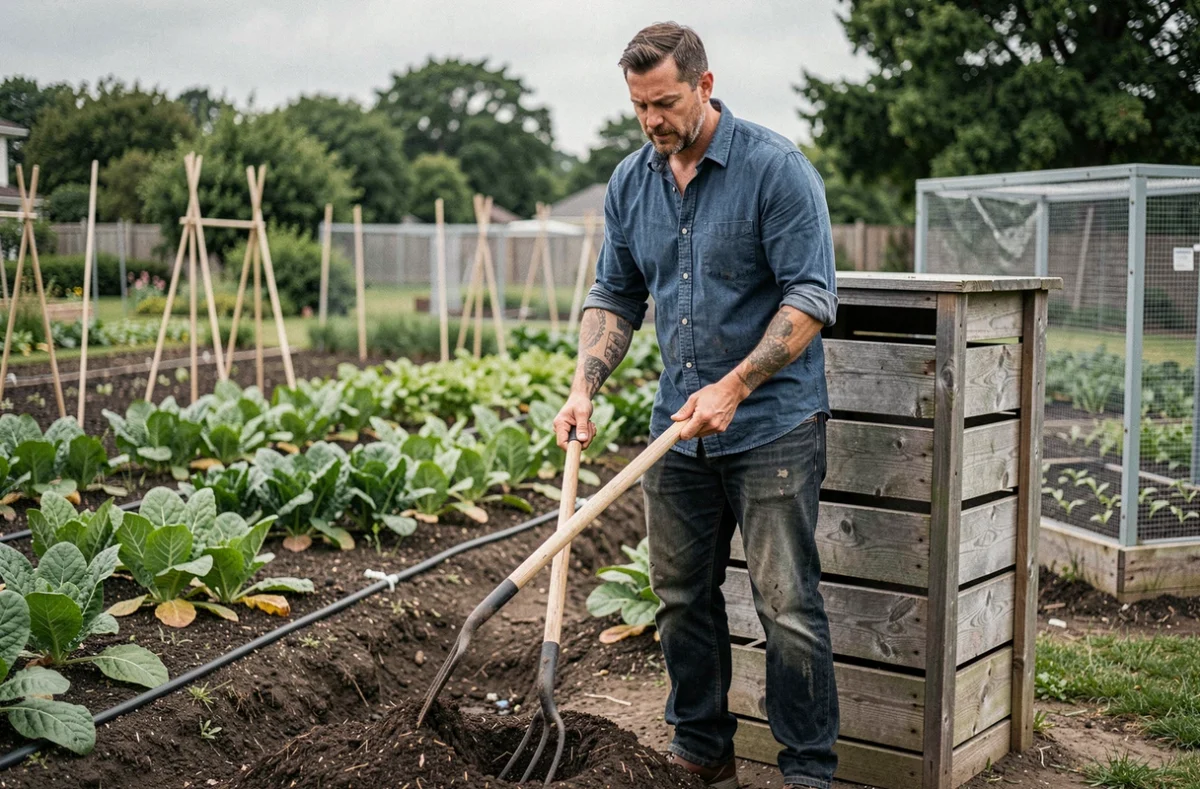
Associations that truly alter soil dynamics
Legumes (beans, peas, fava beans) fix atmospheric nitrogen in the soil thanks to bacteria housed in their root nodules. Planted next to nutrient-hungry crops like squash or cabbage, they provide free and continuous fertilization.
Sowing dwarf beans at the foot of squash replaces part of the nitrogen compost input. This is not marginal: the difference is visible in the color of the foliage within a few weeks.
Conversely, some associations harm crops. Garlic and onions release sulfur compounds that inhibit the growth of beans. Potatoes and tomatoes, from the same nightshade family, share the same fungal diseases. Growing them side by side offers a corridor for the spread of blight.
Crop rotation in the organic vegetable garden: the underestimated lever
Rotation involves not growing the same family of vegetables in the same place two years in a row. The principle seems simple, but its actual application poses problems in small vegetable gardens.
Why this choice? Each family of vegetables draws specific nutrients and attracts particular pathogens. Tomatoes deplete the soil of potassium. Cabbages consume a lot of nitrogen. If you replant tomatoes in the same spot, the soil becomes impoverished, and blight spores accumulate in the ground.
A realistic rotation cycle in four zones
- Zone 1: fruiting vegetables (tomatoes, zucchini, peppers) on soil enriched with compost the previous autumn
- Zone 2: leafy vegetables (lettuces, spinach, cabbages) that benefit from residual nitrogen
- Zone 3: root vegetables (carrots, beets, turnips) that structure the soil deeply
- Zone 4: legumes (beans, peas) that recharge the soil with nitrogen before restarting the cycle
Four zones are enough to break the cycle of diseases and balance nutrient extraction. Even on a modest area, mentally dividing the space into four sectors and rotating them each year changes the game in two or three seasons.
A healthy organic vegetable garden does not require more work than a conventional garden. It requires better-placed work: upstream, on the soil and design, rather than downstream on treatments. The soil does most of the work when given the means.