The choice of a surface for a yard never follows a universal logic. Some materials prove to be irreversibly incompatible with intensive use, while others, deemed robust, accumulate unexpected maintenance costs.
A floor that seems perfectly suited on paper can deteriorate in just a few years depending on the layout or exposure. The criteria pile up: technical constraints, aesthetic expectations, budget, local regulations. The options multiply, but none stand out without compromise.
What are the main surfaces for a yard: asphalt, paving stones, or decorative concrete?
Choosing the right surface transforms a home yard into a true extension of the living space. Behind each solution—asphalt, paving stones, decorative concrete—lies its own logic, balancing performance and style. Asphalt, often referred to as bitumen, primarily focuses on strength and simplicity. It withstands the daily back-and-forth of vehicles without flinching, offers a flat and even surface, and requires hassle-free maintenance. While its appearance may sometimes seem too plain, it reassures with its long-term reliability.
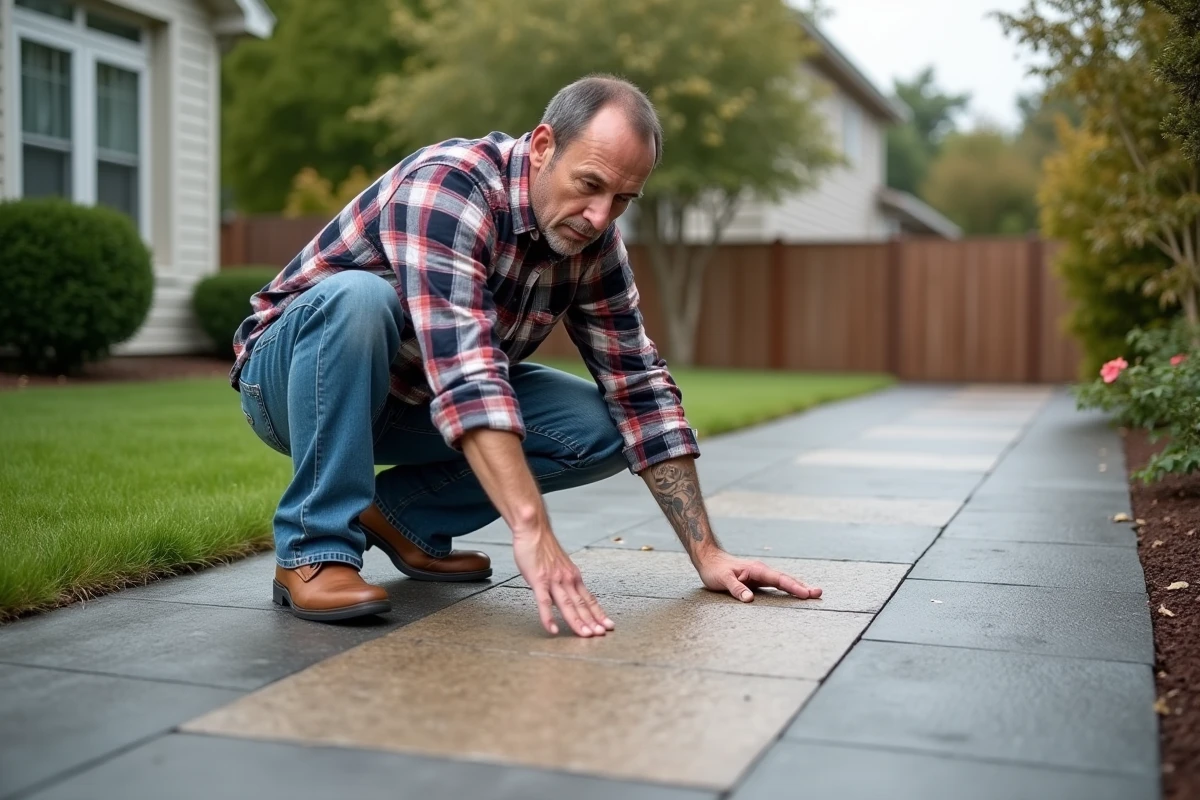
Decorative concrete, on the other hand, catches the eye with its graphic quality and the possibility to play with textures. Thanks to the exposed aggregate effect, it adds a modern, almost mineral touch to the yard. It is appreciated for its robustness and unique look, provided one accepts a cost higher than that of classic asphalt. Those looking to give character to their exterior often find it appealing.
For those who enjoy flexibility, paving stones are a favorite. Their strength? An incredible variety of shapes, materials, and colors, from sandstone to reconstituted stone to concrete. The real advantage: replacing a damaged stone requires no excessive effort and allows for the longevity of the entire surface without a complete overhaul. Certainly, installation takes time and precision, but the result adds undeniable charm to the home.
If you wish to examine the subtle differences between each solution, the file “ which surface for a yard in asphalt and paving stones ” untangles the advantages and limitations of each option. No two yards are alike: each project imposes its own equation, shaped by the terrain, usage, and desire.
Advantages, disadvantages, and recommended uses: a comparison of materials
Each material has its strengths and weaknesses, but above all, its preferred terrains. Here is an overview of the characteristics to consider before making a decision:
- Asphalt: It withstands repeated traffic, offers a uniform surface, and requires little effort for maintenance. It is the solution for busy garage entrances or large driveways. Its clean style leaves little room for whimsy: efficiency above all.
- Decorative concrete: With its granular effect, it makes slips unlikely even in the rain. It adapts well to pedestrian areas, terraces, or yards where harmony between style and robustness is sought. The careful finish and choice of aggregates increase the cost, but the result remains unmatched.
- Paving stones: Flexibility, style, and ease of repair are its assets. Sandstone, concrete, natural stone: each material has its grain, color, and texture. Installation takes time, but customization is total. For those who want a yard that stands out, it’s hard to find better.
- Gravel and stabilized gravel: Classic gravel is appealing due to its low cost and natural management of rainwater. In its stabilized version, it better withstands repeated traffic and stays in place longer. Ideal for large spaces with intermittent use, provided one accepts regular maintenance.
With this wide range, it becomes possible to adjust the project to the nature of the soil, moisture management, and the desired style, without sacrificing practicality or aesthetics.

Style, budget, maintenance: how to make the most suitable choice for your project?
Making a choice is not just a matter of falling in love with a color or texture. Three parameters dominate: the desired look, the budget to be spent, and the ease of maintenance over time. Regardless of the material, each imposes its rhythm, its requirements, its constraints.
In terms of style, decorative concrete appeals to lovers of natural tones and contemporary looks. It enhances both modern architectures and more classic buildings. Paving stones, on the other hand, multiply the possibilities: straight laying, herringbone, varied shades, stone or concrete. Asphalt, finally, gets straight to the point: homogeneous surface, few embellishments, ideal for those who want an efficient and discreet yard.
The budget quickly weighs in the balance. Asphalt remains affordable, especially over large areas. Paving stones and decorative concrete cost more, but they offer customization and durability that can justify the investment, particularly for enhancing the property in the long run.
As for maintenance, asphalt simplifies life: a sweep or a blast of water, and it’s good to go. Decorative concrete requires occasional high-pressure cleaning to maintain its shine. Paving stones, meanwhile, play the modularity card: replacing a damaged element does not jeopardize the entire setup. To make the right choice, it’s best to review the terrain constraints, actual needs, and the future purpose of the yard.
Ultimately, each yard tells its own story, written in the material and time. The choice of surface, far from being trivial, shapes daily life and leaves a lasting mark. It remains to be seen what kind of trace you wish to leave, and for how many seasons.