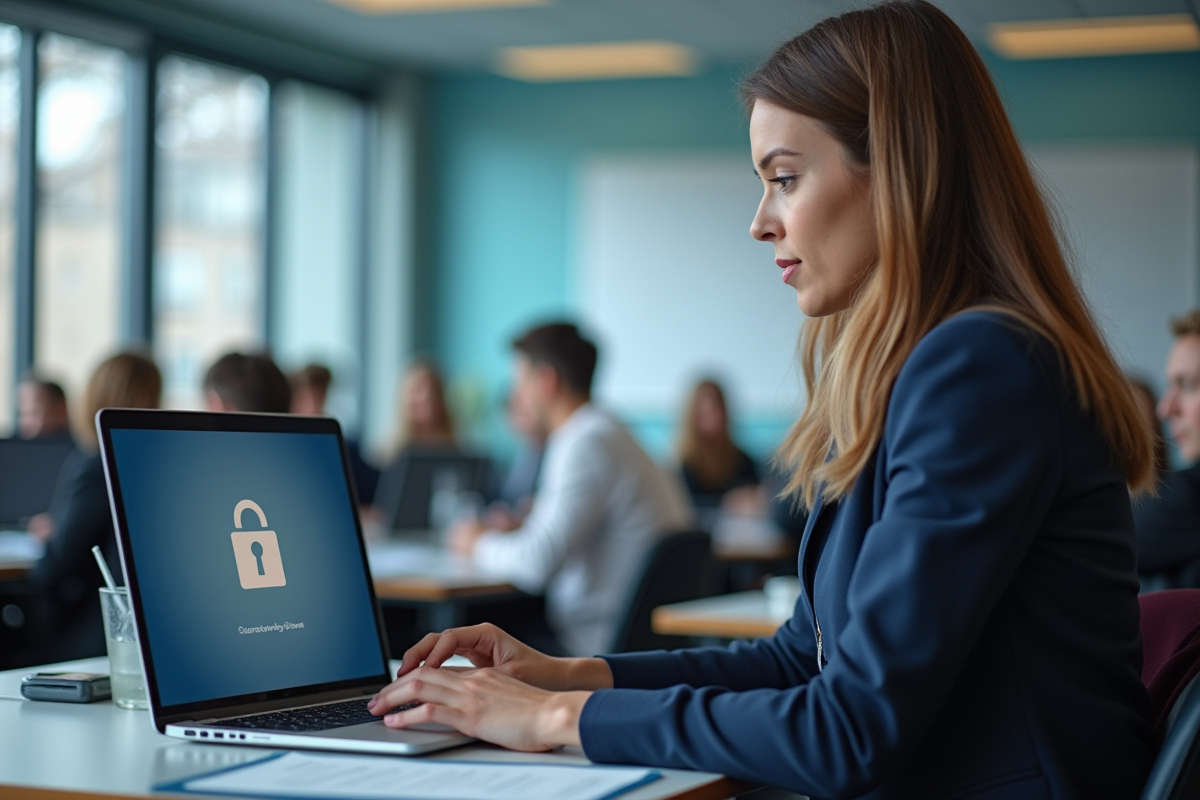
Education professionals today must juggle a multitude of digital tools to teach, assess, and communicate with their students. This transition to digital, while beneficial, exposes schools to cybersecurity risks. The sensitive data of students and teachers, as well as the proper functioning of learning platforms, depend on secure connections.
In light of these challenges, several secure connection solutions stand out. VPNs, multifactor authentication, and virtual private networks are options that help protect information and ensure seamless educational continuity. By adopting these technologies, education professionals can focus on their primary mission: imparting knowledge with peace of mind.
The Challenges of Digital Security in Education
The digitization of schools, while beneficial for students, poses considerable challenges in terms of cybersecurity. Sensitive student data, such as academic results, personal information, and assessments, must be protected against cyberattacks and data breaches. Educational software and online services used by teachers must adhere to the strictest security standards.
Risks and Solutions
Schools face a variety of threats:
- Phishing and targeted scams aimed at teachers and students.
- Intrusions into systems via malware.
- Theft of sensitive data stored on unsecured servers.
To counter these threats, robust solutions are necessary. The use of secure services like Webmail 72, which ensures a secure connection for education professionals, is essential. Multifactor authentication, VPNs, and data encryption are practices to implement to guarantee digital security in schools.
Accessibility and Security
Digital tools used in schools are beneficial for overcoming autism spectrum disorders (ASD), multiple disabilities, and specific language and learning disorders (SLD). These technologies must also comply with the standards of the General Framework for Improving Accessibility (RGAA). Tools such as screen readers, virtual keyboards, or Windows voice recognition enable students with disabilities to fully participate in educational activities while maintaining a high level of security.
Teachers must be trained in good cybersecurity practices, including device management and the use of secure software. By ensuring optimal security, they can focus on their educational mission without fearing for data integrity or the confidentiality of personal information.
Secure Connection Solutions for Schools
Schools must adopt secure connection solutions to protect data and ensure reliable educational continuity. Here are some of the most effective options:
- VPN (Virtual Private Network): Using a VPN encrypts internet connections and secures data exchanges between teachers and students.
- Multifactor Authentication (MFA): This security measure adds an extra layer of protection by requiring multiple forms of identification before accessing systems.
- Data Encryption: Sensitive data must be encrypted, whether in transit or at rest, to prevent unauthorized access.
Tablets, often used by students, must be configured with robust security systems. The use of screen reader systems and switches connected to computers allows for secure and adapted interaction for students with disabilities.
Virtual assistants can also be programmed to launch secure applications like Firefox, thus ensuring protected web browsing. Eye tracking, a technology used with computers, enables students with motor disabilities to interact securely and effectively.
Device management must include rigorous practices for updates and maintenance. Education professionals must ensure that all devices used are equipped with the latest security updates to prevent vulnerabilities.